FAMMO.ai: AI Pet Nutrition Platform (Django REST API + Next.js)
FAMMO.ai is an AI pet nutrition and health platform for the Dutch and Belgian market. As co-founder and CTO, I rebuilt it from a Django monolith into a DRF API with two Next.js apps, and built its AI features and forum, with a food label scanner in progress.
- Celery
- Django
- Django REST Framework
- Docker Compose
- Google Analytics 4
- Gunicorn
- JWT
- Next.js
- Nginx
- OpenAI API
- PostgreSQL
- Redis
- shadcn/ui
- Tailwind CSS
- Tiptap
- TypeScript
- Zustand
Problem
FAMMO started as a multilingual pet content site on a Django monolith hosted on cPanel. Background jobs such as Celery were hard to run there, and the old setup could not support the product the team wanted to build: personalised pet nutrition, AI health reports and a vet directory for pet owners in the Netherlands and Belgium.
The team needed a backend that could serve a public website, an internal admin console and later a mobile app, plus infrastructure that could run Redis, Celery and a mail server without workarounds.
Solution
I moved the product into three separate repositories and a Docker-based VPS setup:
- Backend: Django REST Framework API under
/api/v1/, PostgreSQL, JWT authentication with refresh, role-based access (eight user roles), Celery and Redis for background work. - Public website: Next.js (App Router, TypeScript, Tailwind CSS, Zustand) with a dual-zone design system: amber for nutrition, sage for health.
- Admin console: an internal Next.js app for users, pets, clinics, subscriptions, branding and a blog editor built on Tiptap.
Key decisions and features:
- Moved the data from SQLite to PostgreSQL, then removed the old central
apiapp and placed API code inside each domain app. - Tested 74 API endpoints and fixed five bugs found in that pass, including silent data loss on pet creation and blocking Telegram notifications.
- Built NURNO, an AI assistant for pet health and nutrition, plus AI meal plans and AI health reports using the OpenAI API, with plan-based usage limits.
- Built a pet profile wizard, a vet directory with a map and appointment booking, and the PawTalk community forum.
- Added FAQPage structured data across the site, including an automatic parser for FAQ sections in about 70 published blog posts.
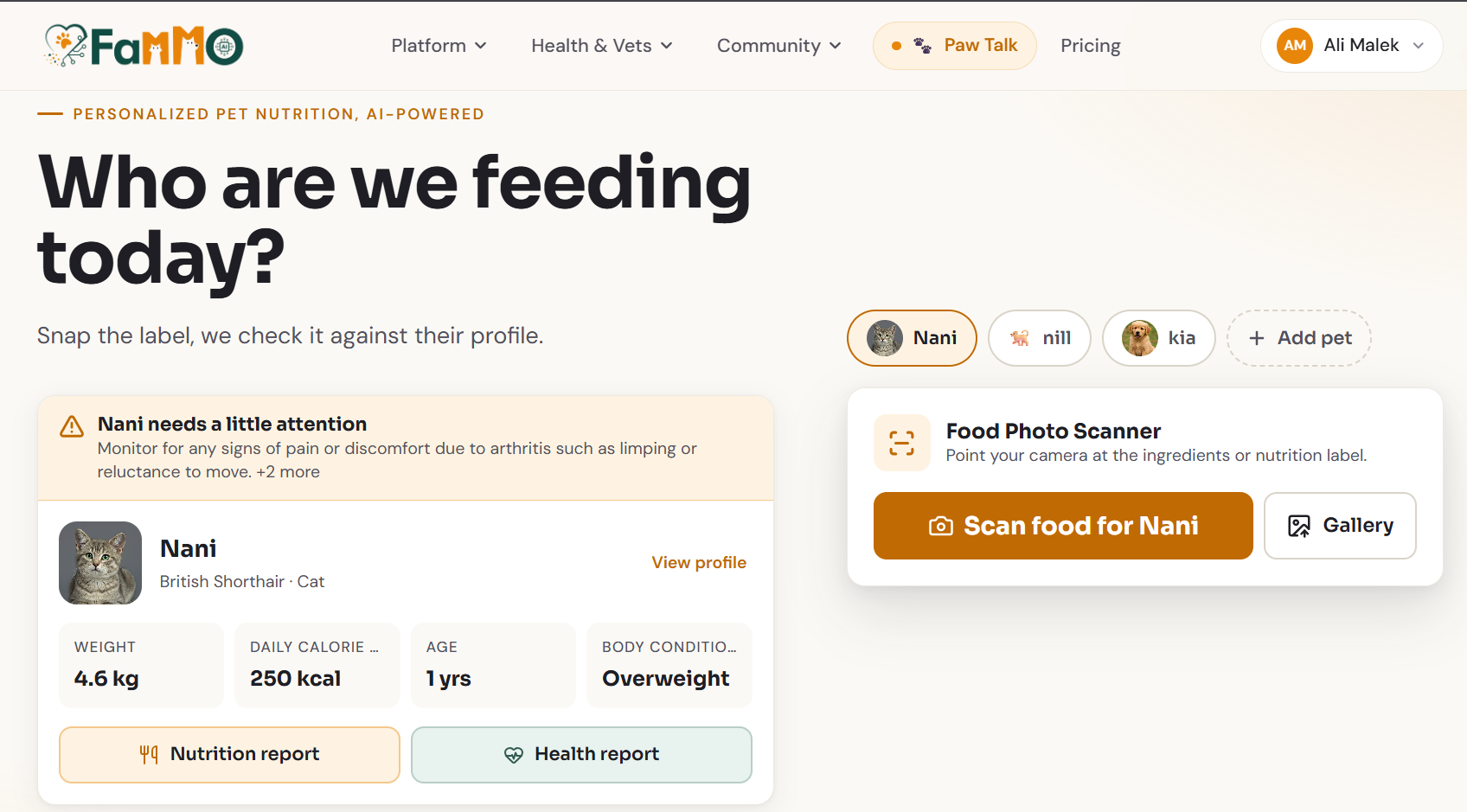
- Started a Food Photo Scanner: a user photographs a pet food label and the AI judges it against the pet's profile, using a shared product catalog and an admin review flow. Backend and API are built; the interface is in active development.
- Deployed everything with Docker Compose behind Nginx, with Gunicorn, Celery, Redis and a self-hosted mail server for transactional email.
Result
The new platform is live on its own VPS and serves the public site, the admin console and the API. More than 2,000 registered accounts and 300+ pet profiles were carried over through the data migration.
After launch I audited the sign-up paths and fixed broken links, and the product keeps improving every week, with the Food Photo Scanner interface as the next feature to ship.